Here’s the thing, I am friends with Nick Kristof and have been reading his articles for years before he became interested in Bahrain. I got to know Nick when I approached him to offer presenting Bahrain and the news floating around from my point of view. He accepted and we hung around in one of his visits to Bahrain for about 4 hours. Later, he posted this video on NYT.
I was surprised when I woke up few days ago to see that he’s in the airport, being deported to the UAE. It would have been a courtesy for him to inform me so that I would welcome him to Bahrain. We had contacted each other variously before and I know that Nick knows about the proper procedure for journalists to enter Bahrain, which is to obtain a media visa, applying to it online. He may have his reasons, but below is what he published on Bahrain and right after is IAA’s response. Enjoy.
When Bahrain Said: Get Lost
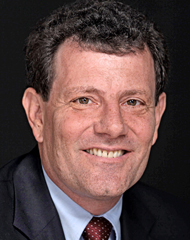
Nicholas D. Kristof
BAHRAIN, one of America’s more repressive allies, tries to keep many journalists and human rights monitors out. I recently tried to slip in anyway.
The jig was up at the Bahrain airport when an immigration officer typed my name into his computer and then snapped to attention. “Go back over there and sit down,” he said, looking at me in horror and keeping my passport. “We’ll call you.”
The Sunni monarchy in Bahrain doesn’t want witnesses as it tightens its chokehold over a largely Shiite population. Almost every evening, there are clashes between the police and protesters, with both sides growing more enraged and violent.
Around 100 people have been killed since Arab Spring protests began in Bahrain in February 2011. I was in Bahrain then as troops opened fire without warning on unarmed protesters who were chanting “peaceful, peaceful.”
The oppression has sometimes been nothing short of savage. Police clubbed a distinguished surgeon, Sadiq al-Ekri, into a coma — because he tried to provide medical aid to injured protesters. By all accounts, torture has been common.
In the larger scheme of things, Bahrain is a tiny country and maybe doesn’t matter much to the United States. What nags at me is that this is a close American ally — assaulting people in some cases with American equipment — yet the Obama administration mostly averts its eyes. This is a case not just of brutal repression, but also of American hypocrisy.
After that initial crackdown in 2011, the king commissioned a blunt outside report, and the Obama administration hoped that the country would ease up under the more open-minded crown prince. That hope is collapsing, and Bahrain is now clamping down more tightly.
“The human rights situation in Bahrain has markedly deteriorated over recent months, with repressive practices increasingly entrenched,” Amnesty International noted in a recent report on Bahrain. It concluded: “the reform process has been shelved and repression unleashed.”
The crackdown has, in turn, hardened the opposition, which increasingly turns to Molotov cocktails, rocks and other weapons to confront the authorities. Moderates on both sides are being marginalized.
This is a tragic turn for Bahrain, which traditionally was a lovely oasis of prosperity, moderation and toleration. Astonishingly, the country’s ambassador to Washington is actually a woman from Bahrain’s tiny Jewish community.
But the king, Hamad bin Isa al-Khalifa, can blame himself for the escalation of violence. He has imprisoned leading advocates of peaceful resistance, like Nabeel Rajab, the globally respected president of the Bahrain Center for Human Rights. My take is that the regime intentionally jails peaceful moderates so as to leave the protest movement in the hands of young men who discredit it by throwing firebombs — and thus create a justification for repression.
On my last visit to Bahrain, I profiled Zainab al-Khawaja, a dynamic young woman with perfect English who studied Mahatma Gandhi and the Rev. Dr. Martin Luther King Jr. and tries to apply their methods. She is exactly the kind of opposition leader Bahrain needs, firing off Twitter messages rather than rocks, but in an e-mail to me a month ago she lamented: “It’s becoming very hard to even tweet about violations in Bahrain.”
She was prescient: Now she has been imprisoned as well.
“The reason the regime goes after them is because people like Zainab and Nabeel represent a force that they cannot deal with,” said Maryam al-Khawaja, Zainab’s sister, who is now in exile. “They stand firm despite the violence. They continue to protest, and they refuse to use violence. This encourages others to do the same. It’s easier for the regime when protesters use things like Molotov cocktails.”
The Obama administration initially spoke out against the crackdown but has since been “inconsistent and muted,” notes Brian Dooley of Human Rights First. “This has been horribly frustrating for human rights activists in Bahrain hoping that the U.S. would support their push for democracy,” he added.
President Obama pulls his punches partly because the United States bases the Navy’s Fifth Fleet in Bahrain and partly because Saudi Arabia insistently backs the repression in Bahrain. The security considerations are real, but, to me, this feels like an echo of Egypt: the United States curries favor with a dictator and ignores public yearning for change. The upshot is extremism, instability and anti-Americanism.
At the airport, an immigration officer eventually approached and told me: “Your name is on a list. You cannot be admitted.” There’s no negotiating with a blacklist, and early the next morning I was deported to Dubai.
Government officials treated me respectfully, and I never felt in danger. It’s different if you’re Bahraini. On the day I arrived, police arrested perhaps the last Bahraini human rights activist still at large, Said Yousif al-Muhafdah, after he posted a photo on Twitter of a protester whom police had shot with shotgun pellets. Muhafdah is charged with “disseminating false information through Twitter.” The downward spiral continues.
Response to New York Times – When Bahrain Said Get Lost by Nick Kristof – December 22nd 2012
Dear Editor
This letter is in response to Nick Kristofs latest editorial, When Bahrain Said: Get Lost (December 22nd, 2012) for a totally exaggerated and inaccurate account of Bahrain.
Firstly, it must be clarified that it is standard procedure for incoming media, regardless of nationality, to obtain an approved media visa prior to arrival, should they choose to fulfill professional duties in country. The author failed to obtain this visa, yet chose to attempt in entering the country, knowingly of the countrys policy.
Despite the authors elaborate account of what only was standard airport procedure, he should be reminded that well over 500 journalists have been welcomed this year alone. Additionally, apart from the International Committee of the Red Cross, who has been granted access to regularly visit and monitor the detention facilities, other human rights advocates have been invited. This includes a delegation from the UN High Commissioner for Human Rights, who visited earlier this month and were given full access to meet all their requests. Another UN Special Rapporteur on Torture is scheduled to visit in the coming months. The door continues to be open to credible parties who wish to assist the country in its growth.
The author appears to be uninterested in opinions conflicting with his own, especially those of the Government, given the request to be removed from the Information Affairs Authority mailing list which has consistently disseminated updates on the reform process.
The release of the Bahrain Independent commission of Inquiry (BICI) Follow-Up report last month (http://bit.ly/TFPg83), restored hope with the many developments enforced during the past year. The author chose to source Amnesty International, who released their report on the same day as the BICI Follow-Up Units report, therefore lacked any consideration for reviewing – or intention to review – what has actually been achieved with regard to the reforms.
With the Governments wholehearted commitment, it has ensured that no one is detained for their right to exercise freedom of expression. An individual like Mr. Nabeel Rajab is responsible for continuous calls to provoke citizens to defy the laws of public gathering, which often turn extremely violent. Ms. Zainab Al-Khawaja has several charges against her; including attempted entry of a prohibited military zone, a serious crime in any country; and most recently, protesting inside the premises of the largest hospital facility in the country, disrupting the activities of the medical staff and their patients. These breaches cannot be labeled as acts of heroism. One that justifies these actions provides reasons to defy the rule of law, diminishing the stability and security of all citizens.
The legal channels are accessible for all who choose to express discontent with the Government, whether in Parliament, or through the daily critiques of Al-Wasat newspaper, or even in one of the over 90 legal rallies that occurred this year alone. Individuals that choose to repeatedly abuse the legal code, endangering the majority of citizens lives and livelihood, is not something the Bahraini Government, or any establishment, would stand for.
Finally, Mr. Said Yousif Al-Muhafdha is not the last activist as implied; as citizens continue to voice concerns through the legal channels mentioned earlier. Contrary to the authors claim, the country has been changing and progressing since 2002, and as in any modern society, will continue to adapt to the ever-changing needs of society


 Dr. Saqer AlKhalifa
Leave a reply to saqeralkhalifa Cancel reply