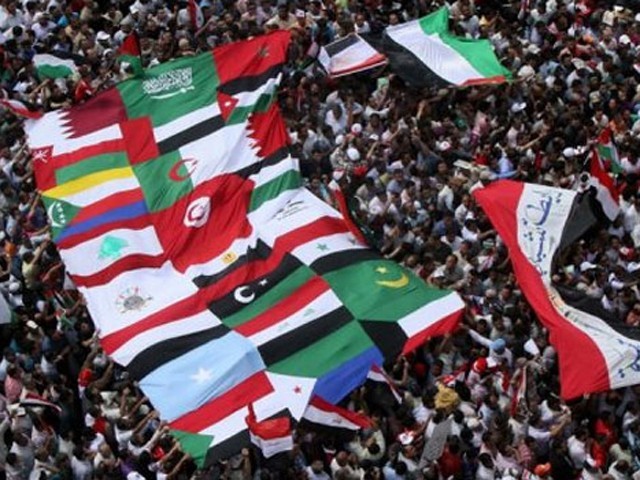
It has been almost three years since the Arab Spring zoomed across the Arab world, into each and every country in the region and in the periphery as well. As I suspected from day one, the so-called ‘spring’ had no good promises. While it was supported by almost everyone outside the region, the intellectuals inside warned continuously, but most did not listen.
Today, after Western powers spent the last three years trying and failing to make sense of the situation in the Arab world, they are coming back with shy ears to admit their misunderstanding. The American and European foreign policy towards the Middle East can only be titled as a ‘big failure’, and the American one starting way back in 2003 when it decided to invade Iraq. With this flop, there are only two possible ways for us analysts to conclude, sitting here in the year 2014. The failure in foreign policy can either be due to domestic incapability, or that the current Middle Eastern instability was actually a Western intentions, for whatever reasons.
Till this day, I have met many influential Western individuals. I would say about 99% of them would suggest that the foreign policy failure was due to incapability, rather than it being intentionally. I would hear it again and again and again, that decision makers are clueless, that they though they know, but they actually did not. Well then, these failing policies raise more serious questions, and it is important for the Western taxpayer to know more right here.
Western powers spend tremendous amount of money on intelligence and diplomatic relations. They have a foothold of numerous embassies around the world, with actual qualified personnel occupying significant posts, for many years. The disconnect between people on ground, including military officers and enlisted personnel, and the decision makers back in each respective Western nation capital is a very serious concern. Logically and rationally speaking, a failing foreign policy is a true reflection of a failing domestic political spectrum. Why invest so much if those reports have only a slim chance for making it to decision makers’ desks.
While I as a political scientist do understand the shortcomings of a capitalist democracy, it is important for you all to note how devastating the lack of knowledge one can create when meddling in the unknown. Most Middle Eastern nations have week governments, which make it easy for the public when they mobilize to balance and threaten their governments. However, the West failed miserably by thinking that there are no informal groups who are already mobilized, ready to take over with their own agendas. A big and common mistake that the West always time and time again does is thinking that the people will happily unite from scratch and begin their own Western-like democratic process. Most, if not all, Middle Eastern nations are only stable because their governments are fending off successfully the mobilized trouble makers, i.e. Muslim Brotherhood and Iranian proxies, but who listens, or at least believes?
There are many explanations for the Middle Eastern monarchies to remain stable in the face of the ‘Arab Spring,’ and I will only hint for one, for now. Recently, a friend of mine posted a very old video on YouTube showing the wedding of the Iranian Shah’s son with King Farooq’s daughter in Egypt. What was eye-catching to me were the comments under the video. “A Monarchy, the good old days,” said some comments.


 Dr. Saqer AlKhalifa
Leave a reply to Chris Giorgi Cancel reply