
On Wednesday, I attended a presentational seminar by a friend of mine, Hazem Janahi, organized by Bahrain Society for Strategic Planning (BSSP). I’m very thankful to Dr. Hala Sulaibeekh, the President of BSSP for extending an invitation to this wonderful and thoughtful event.
In the lecture, Mr. Janahi explained how the rules and regulations in Bahrain are not friendly to Entrepreneurship and they stand in the way of job-creation opportunities. Before concluding, he recommended that Bahrain allows people to work from home, better bankruptcy laws (to assist start-ups), easing commercial registration process, regulate and support Business Angels, and more encouraging business loans.
I very much agree with my friend, however, from my personal experience and perspective, I see that there are more serious issues that need to solved, in order to ensure that the above applies. We first need to understand the role of governments, why do the exist?
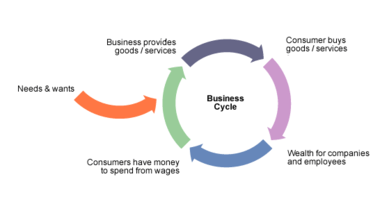
Everyday, while driving to work, in traffic, I see many cars around me and wonder where they are heading towards. Do they work in Banks, in factories, in government, or simply driving for the heck of it? Well I know that most, if not all, are going to make a living, or help others make a living from work. Each one of us fits in the economic cycle, we can be producers, consumers, or both.
However, what’s intriguing here is that the economic cycle would not always be an easy functional cycle. This is why we have governments. Governments are the force that ensures each cycle that consists of producers and consumers work fair, well, and outputs progression, development, and prosperity.
For example, an employee, wherever he is, needs to survive and possibly reach his lifetime goals. Therefore, the government would strategize and implement plans for this to happen. The government would perhaps create a balance of rights between him as an employee and his employers. The government would invest in the money he pays, taxes or pensions, to provide proper services in return. If the employee works in the government sector, the government would create opportunities or an exit plan if he wishes to relocate to the private sector.
Much more than this, governments are umbrella-like, they provide the proper shade and interfere only when needed to the horizontal relationship between firms and sectors, and vertical relationship between companies and their employees, to ensure fairness and directional correctness. Is this happening in Bahrain? No. Why? Read on.
Have you ever seen a rock, a big rock, in the middle of the road? Once you reach this rock, you have three options, to stop and do nothing, to go around it, or to gain the ability to remove the rock for a better road. Unfortunately, in many places which includes Bahrain, we either stop and do nothing, go around and never actually try to deal with the issue, or hire a European firm to tell us that we have a rock issue on the road. Years later, we find out that going around benefits someone special in some way.
The fact is, in Bahrain, we don’t have the ability to remove a big rock, which is in reality an obstacle to development in all shapes and forms. The caliber of human capital is unsatisfactory and below par. Let me explain in a simple example. Today, many restaurants and logistics companies aren’t able to get a Commercial Registration unless they have the necessary area for car park. Why is this the case if there is a big opportunity to make loads of funds from them? Parking shouldn’t be a government problem, it should be seen as an opportunity. The Traffic Department can penalize careless parking drivers, and it is up to the business owners whether they see it beneficial to provide ease of entry to their customers. The Traffic Department say they don’t have enough personnel for this task. Well if every officer makes up his salary three times, then why not hire more? They say we wish, so I say keep wishing.
The laws are there, the implementations are not, and we lack proper monitoring tools in almost every sector. I’ve personally visited many official monitoring entities in Bahrain to listen to the same broken record, “we don’t have enough personnel.” This, while also noting that the personnel they have are not even qualified as well. So in a nutshell, we in Bahrain greatly lack qualified personnel.
To conclude, because I can literally write a book on this, quality human capital does not start after a person graduates from high school, it starts way before, way way before. There is unfortunately no short term issues for all the mishaps we face today. Unless every problem is micromanaged right from the top, we have to invest in improving the quality of human force thrown each year by waves to the Tetris-like employment machine. Either we do something today, or Tetris will become overwhelmed.


 Dr. Saqer AlKhalifa
Leave a reply to Rafia Bin Ali Cancel reply